ISO 80369-20 / Common test methods

ISO 80369-20:2024 Common Test Methods for Small-Bore Connectors

ISO 80369-20:2024 provides the common type-test methods used by the ISO and IEC 80369 connector series and the ISO 18250 series. Start with the application standard and required Annex, then define the connector pair, fixture, instrument channel and test record.

2024 Current editionEdition 2 Published November 2024Annex B-K Methods and data guidance
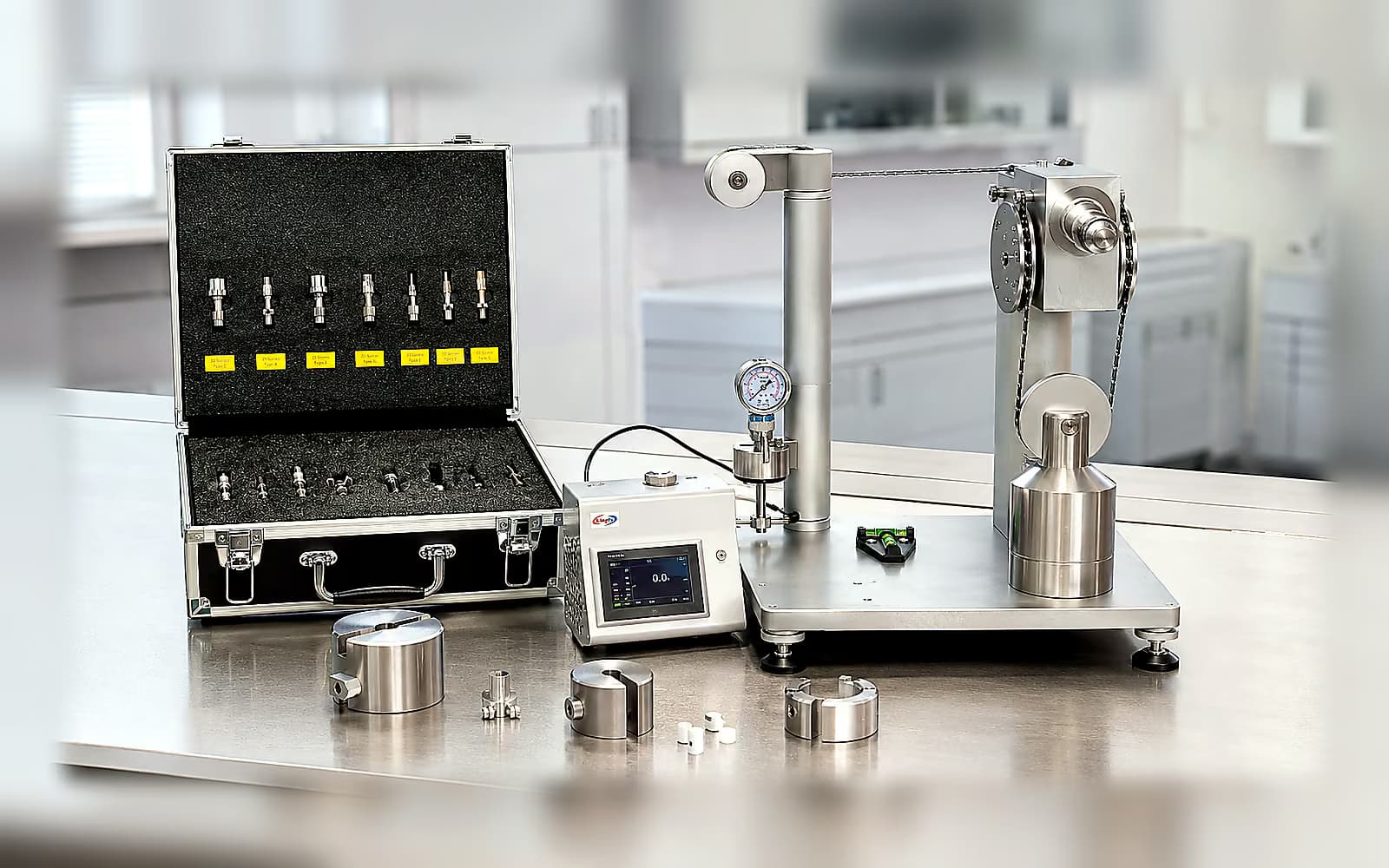
Small-bore connector reference items and test equipment arranged in a laboratory
Test capability is a complete setupReference interfaces, assembly tools, fixtures, instruments and records are selected together for the applicable method.
9 test methodsAnnex B-I plus the new Annex K aspiration method
1 data pathwayAnnex J supports variable data for statistical analysis
Application-ledThe application part identifies required tests and acceptance criteria
Current edition

What changed in ISO 80369-20:2024

The second edition replaces ISO 80369-20:2015. Existing test equipment should therefore be reviewed against the current method, application standard and controlled laboratory procedure instead of being assumed equivalent from an older equipment description.

Wider series coverage

The common methods now explicitly support both the ISO/IEC 80369 series and the ISO 18250 series.

Revised leakage methods

Annex B and Annex D were technically revised. Pressure change replaces leakage rate as the stated acceptance criterion in the 2024 edition.

New aspiration method

Annex K adds an air-leakage-during-aspiration method that was not present in the first edition.

Updated preparation and records

Connector assembly procedures, environmental conditions and test-report requirements were revised across the document.

Annex selection matrix

Match the requested action to the correct method path

The table is a public selection aid, not a substitute for the controlled standard. Exact conditions and acceptance criteria come from the current application standard and approved test procedure.

AnnexMethod and purposeInformation to defineKingPo pathPublic status
BLeakage by pressure decayEvaluates connector leakage from the measured pressure change in a defined pneumatic setup.Application standard, connector side, reference interface, test volume and fixture arrangement.Pressure-decay leakage testerProduct page available
CFalling-drop positive-pressure liquid leakageEvaluates visible liquid leakage while the connected interface is subjected to positive pressure.Test liquid path, sample outlet condition, mating interface, support fixture and observation record.Pressure and positive-pressure liquid leakage testerProduct page available
DSubatmospheric-pressure air leakageEvaluates air leakage while the connector assembly is held below atmospheric pressure.Application standard, connector pair, internal test volume, reduced-pressure route and fixture.Subatmospheric air leakage testerProduct page available
EStress crackingEvaluates connector condition after the specified assembly and environmental exposure sequence.Connector material, application part, reference connector, conditioning and inspection requirement.Method and fixture planningSetup review
FResistance to separation from axial loadEvaluates whether the assembled connector remains connected under a defined axial load.Connector pair, load direction, holding fixture, force range, travel and report requirement.Axial-load separation testerProduct page available
GResistance to separation from unscrewingEvaluates resistance to separation caused by an unscrewing action at the connected interface.Locking interface, assembly condition, torque direction, holding fixture and measurement channel.Assembly and torque setup reviewSetup review
HResistance to overridingEvaluates the locked interface when the specified overriding action is applied.Connector family, assembly preparation, torque interface, restraint and result documentation.Assembly and overriding setup reviewSetup review
IDisconnection by unscrewingEvaluates connector disconnection under the unscrewing action specified by the application standard.Connector family, tested side, assembly condition, rotation direction, fixture and torque record.Confirm equipment and fixture scopeConfirm with KingPo
JVariable data for statistical analysisProvides guidance for adapting applicable methods when variable data are required for analysis.Selected method, data format, sampling plan, measurement resolution and reporting objective.Confirm data and reporting requirementsConfirm with KingPo
KAir leakage during aspirationEvaluates air ingress during an aspiration-related test condition introduced in the 2024 edition.Application standard, sample path, mating interface, aspiration condition, fixture and report need.Confirm equipment and fixture scopeConfirm with KingPo

Annex L links the document to IMDRF essential principles, while Annex M indexes defined terms. Neither is a separate equipment-selection route.

Complete setup chain

Five decisions turn an Annex into a complete test setup

A tester alone does not define the method. The DUT, mating interface, assembly condition, fixture, measurement channel and record must work as one reviewed setup.

01Application requirement

Identify the application standard, edition and required ISO 80369-20 Annex.

02DUT and mating interface

Define the connector under test, its cone or socket side and the required reference connector.

03Assembly condition

Confirm how the pair is assembled before the method is performed.

04Fixture and instrument

Match the holding fixture to the pressure, force or torque measurement channel.

05Test record

Agree the result fields, raw data, report format and certificate wording needed for the project.

Documented KingPo paths

Equipment evidence available for review

These paths use KingPo-supplied manuals and product evidence. For Annexes without a published product page, KingPo will first confirm the method, fixture and measurement scope rather than imply unsupported coverage.

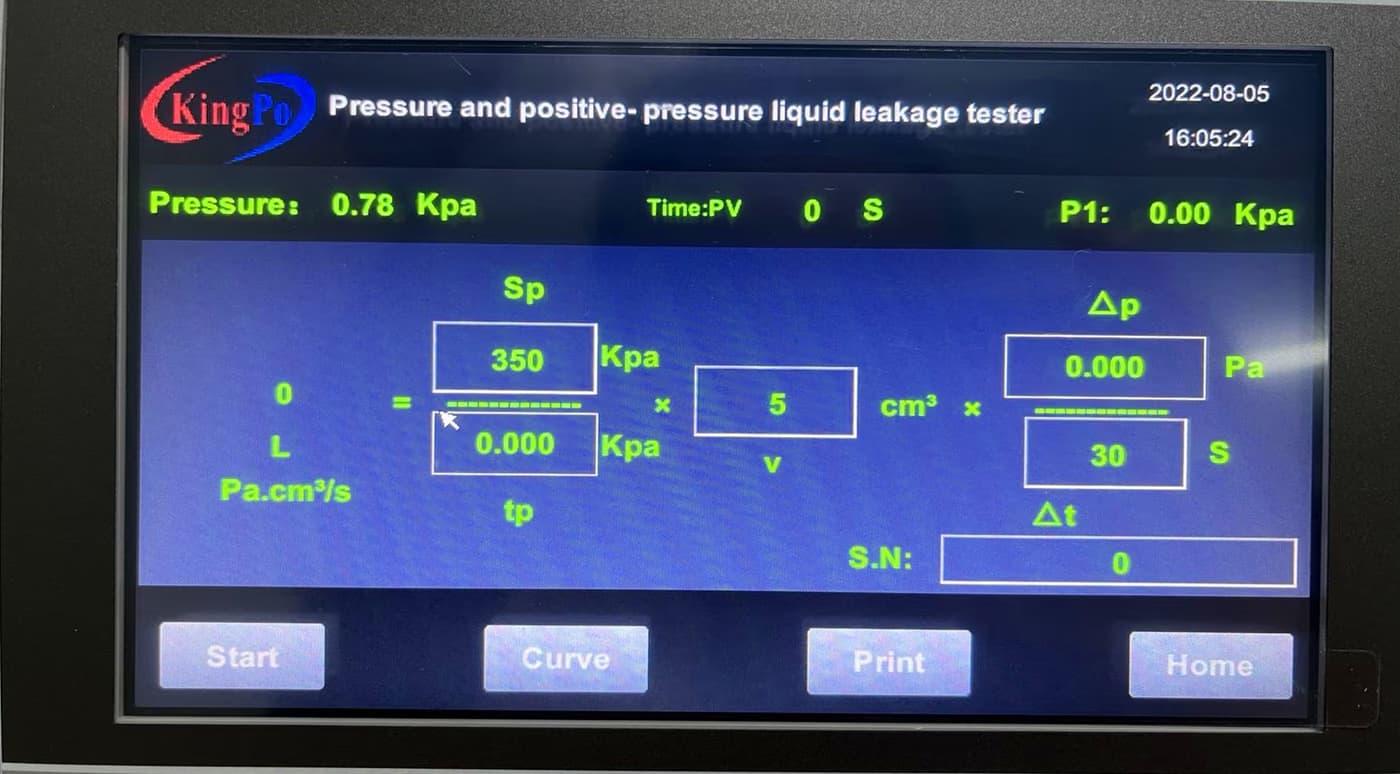
KingPo pressure and positive-pressure liquid leakage tester touchscreen
Annex B / C

Pressure and positive-pressure liquid leakage

KingPo operating material documents pressure-decay and positive-pressure liquid workflows on this equipment family. The 2024 method, test condition and result interpretation must be confirmed for the selected application standard.

Review leakage tester
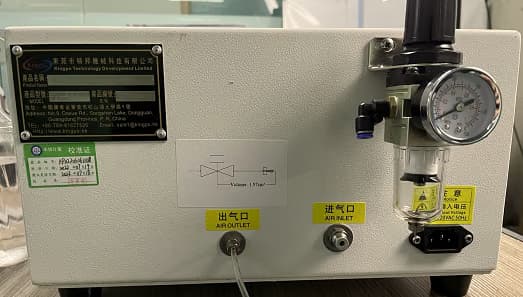
KingPo subatmospheric-pressure air leakage tester front panel
Annex D

Subatmospheric-pressure air leakage

The documented setup combines a reduced-pressure channel, sample-volume input, pressure display, result fields and print controls. Connector and fixture scope are selected for the requested application.

Review Annex D tester
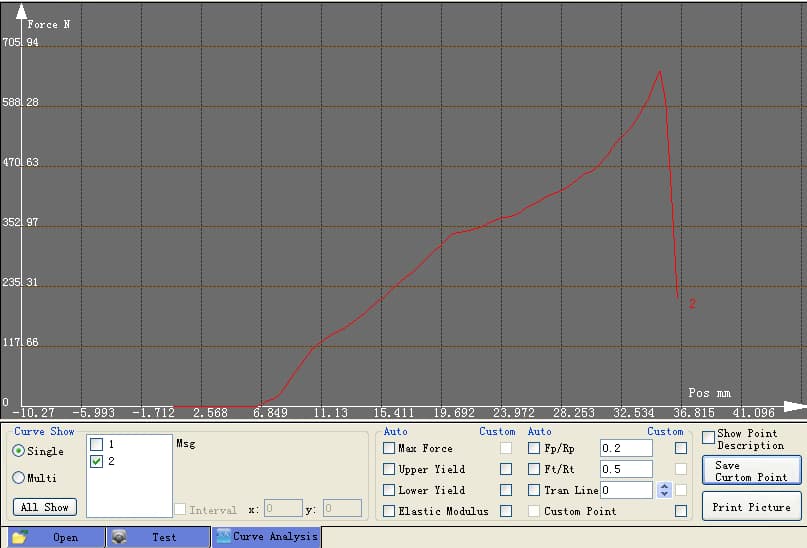
KingPo axial-load tester force and displacement curve display
Annex F

Axial-load separation measurement

KingPo supplied documentation covers the force and displacement workflow, fixture alignment, test program, curve review and result reporting. The public evidence image shows the documented measurement software rather than an unverified exterior product view.

Review axial-load workflow
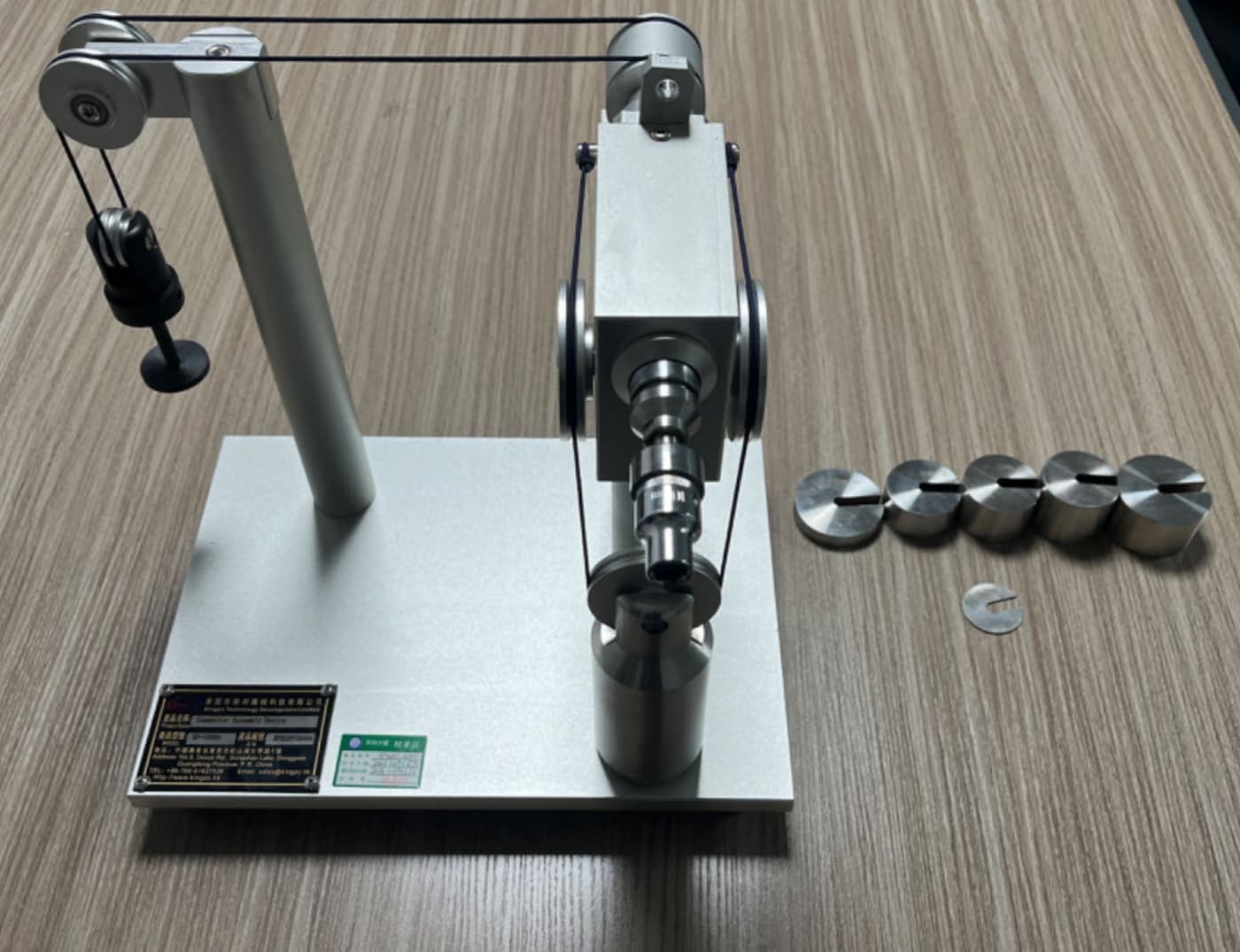
KingPo connector assembly device with force and torque weights
Assembly support

Controlled connector assembly

The manual assembly device applies axial force and torque while preparing a connector pair for downstream methods. It is a preparation fixture, not a leakage or force-measurement instrument.

Review assembly device
Prepare a technical inquiry

Send enough context to select the complete setup

A request containing only “ISO 80369-20” does not identify the required equipment. Include the method, connector and documentation context so KingPo can review the complete setup before quotation.

Application standard and edition
Required Annex or measured action
DUT connector family and tested side
Reference or mating connector
Sample photo or dimensional drawing
Fixture, pressure, force or torque channel
Result data and report format
Calibration and certificate expectations

Public source basis

ISO 80369-20:2024 official catalogue

Current edition, publication status and public scope.

FDA recognized consensus standard record

U.S. recognition and the stated transition from the 2015 edition.

This page summarizes selection context and KingPo equipment evidence. It does not reproduce the controlled standard and does not replace the current ISO document, application standard or an approved laboratory procedure.