
DUT configuration
Record the device, connector side and slip or locking interface.
Start with the Luer connection presented by the device, not a generic ISO 80369-7 product list. The male or female side, slip or locking configuration, applicable edition and required behavior determine the reference connector, gauge, fixture and measurement equipment used for verification.
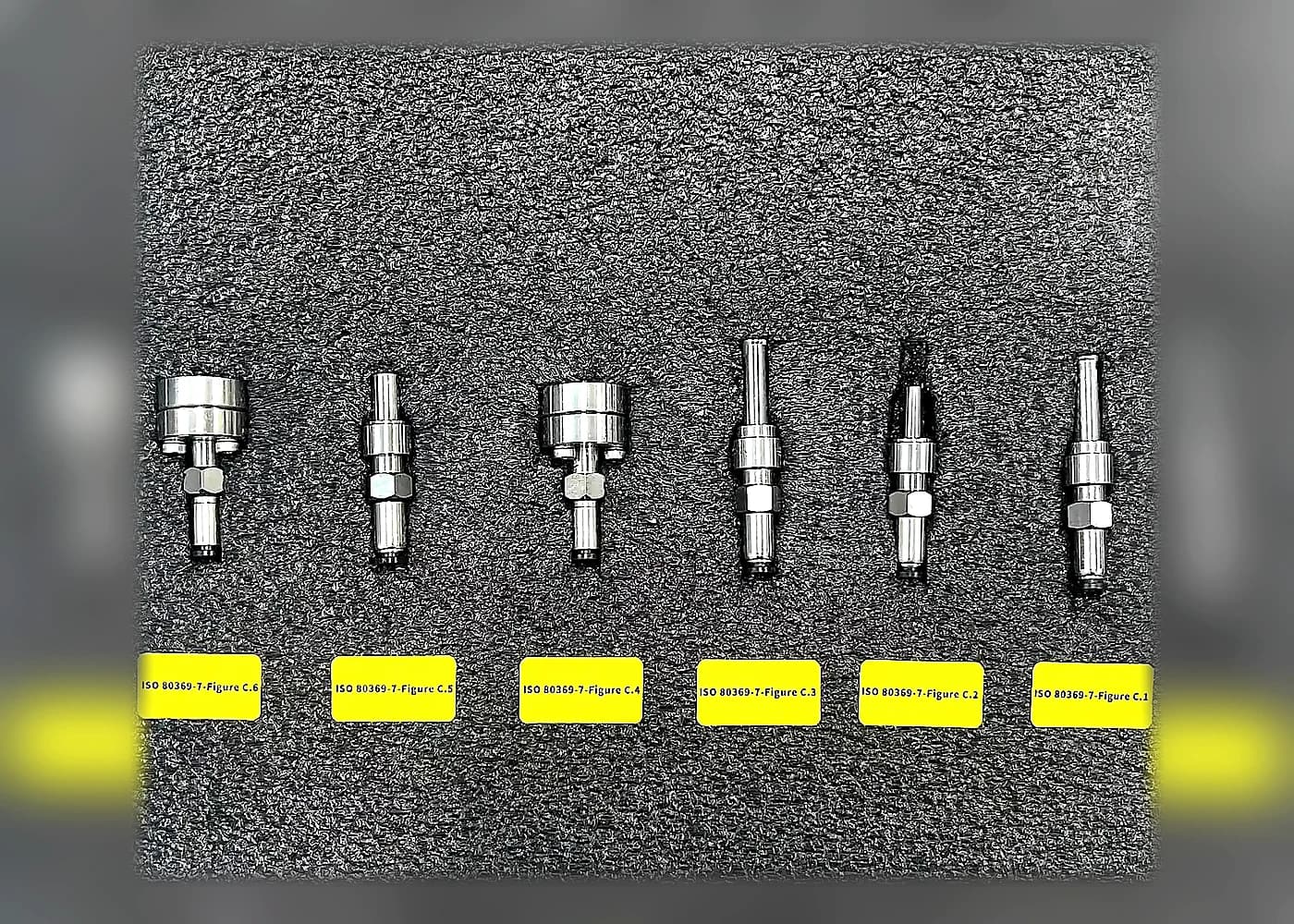
Confirm male or female DUT side and slip or locking configuration before selecting a Luer reference component.
Syringes, IV components and catheter accessories can present different Luer interfaces. Identify the actual connector on the sample rather than selecting from the device name alone.
ISO 80369-7 addresses Luer connectors used for intravascular or hypodermic applications. It covers male and female interfaces in slip and locking configurations, but it does not turn every verification task into the same setup.
The tested side of the DUT and the behavior under review determine whether the laboratory needs a controlled mating reference connector, a dimensional gauge, a holding fixture or method-specific equipment.
A Luer request becomes actionable when the tested side, connection style, applicable edition and measured behavior are all known.
The Luer configuration leads to the controlled mating item, then to the leakage, force, torque or dimensional setup.
Record the device, connector side and slip or locking interface.
Select the relevant mating reference connector or gauge.
Confirm leakage, axial, torque, assembly or dimensional verification.
Support the sample without changing the connection under test.
Match the pressure, force, torque or dimensional channel to the method.
Separate functional testing from dimensional gauging and confirm whether the laboratory needs a reference connector, gauge or both.
A usable request distinguishes the DUT side, connection style and measured behavior. That information changes the reference component and fixture selection.
Photographs and drawings should show the connector side and locking feature clearly enough to distinguish the required interface.
KingPo can review the Luer configuration, reference component, fixture, instrument and requested evidence as one setup.