Clause 6 contains two performance requirements. Both are written in the same form: an applied condition, a holding period, an acceptance criterion, a standard connector from Annex C and a test method annex. In each case the manufacturer may apply a more severe condition, but not a less severe one.
| Clause | Requirement | Applied condition | Acceptance | Test method |
|---|---|---|---|---|
| 6.1 | Air leakage | 50 kPa (375.0 mmHg) to 55 kPa (412.5 mmHg), held 95 s to 100 s | Leakage rate not exceeding 80 Pa·cm³/s (0.60 mmHg·cm³/s) | Annex C leakage standard connector, Annex I |
| 6.2 | Resistance to separation from axial load | 2 N to 3 N in a home healthcare environment; 32 N to 35 N in other environments | No separation from the standard connector during the holding period | Annex C axial separation standard connector, Annex J |
6.1. Air leakage
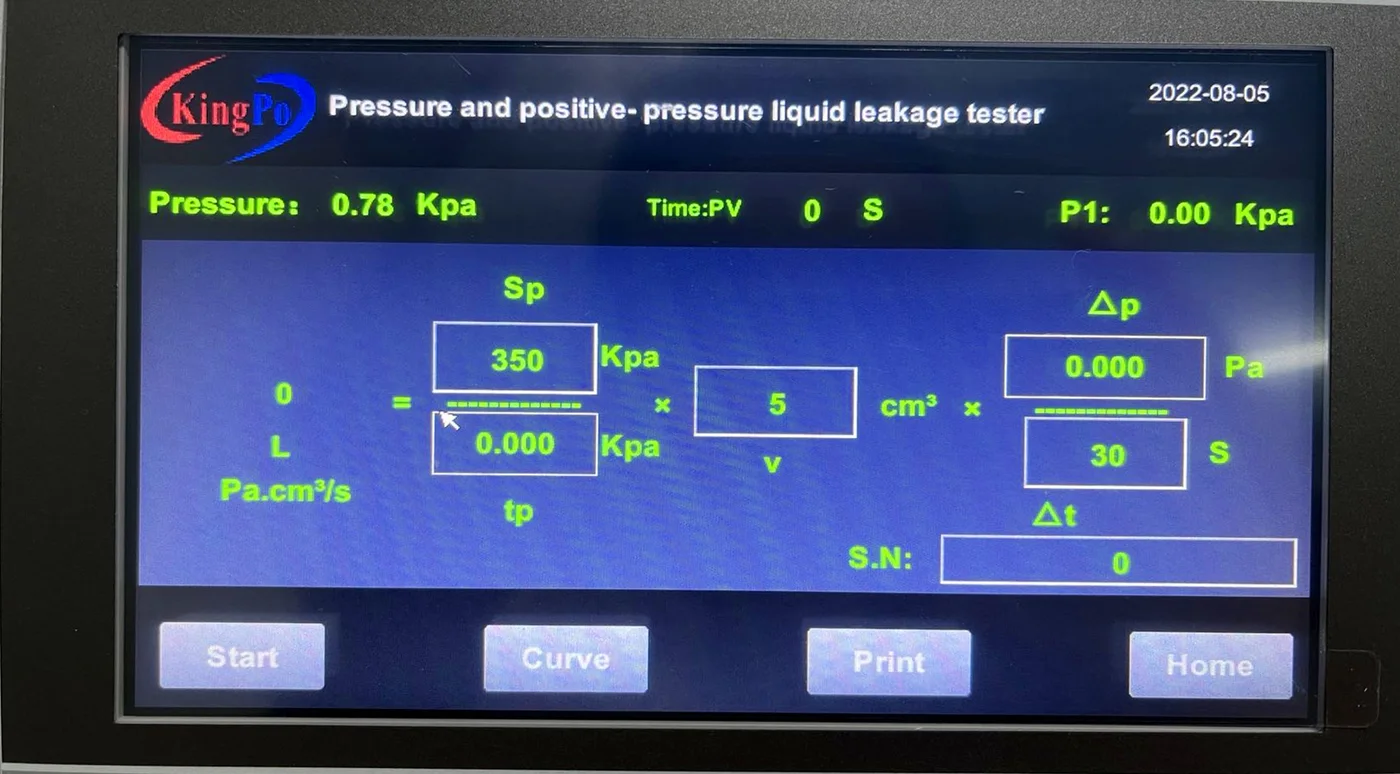
A mated pair of limb cuff connectors is evaluated for gas leakage. Air is applied at 50 kPa to 55 kPa and held for 95 s to 100 s, and the leakage rate over that period shall not exceed 80 Pa·cm³/s. The equivalent value in the units used elsewhere in the draft is 0.60 mmHg·cm³/s. The requirement applies to connectors for both paediatric and adult patients; no separate neonatal limit is given, which is consistent with Clause 1 deferring neonatal connectors to a future amendment. Conformity is checked using the leakage standard connector of Annex C by the pressure decay method of Annex I.
The 50 kPa lower bound is not arbitrary. Table F.1 records a maximum operating pressure of 50 kPa (375 mmHg), at least 10 % above the pressure of a single-fault condition of the sphygmomanometer, and a rated pressure range of 0 kPa to 55 kPa (412 mmHg). The test band therefore sits at the upper end of the operating envelope, and 55 kPa is the rated maximum. Table F.1 also gives a design leak criterion of no more than 0.5 kPa/min at 55 kPa (4 mmHg/min), limited to 10 % of the leakage allowed for the sphygmomanometer and cuff together. The design figure and the Clause 6.1 acceptance figure are expressed in different units and serve different purposes; only the latter is a conformity criterion.
6.2. Resistance to axial separation
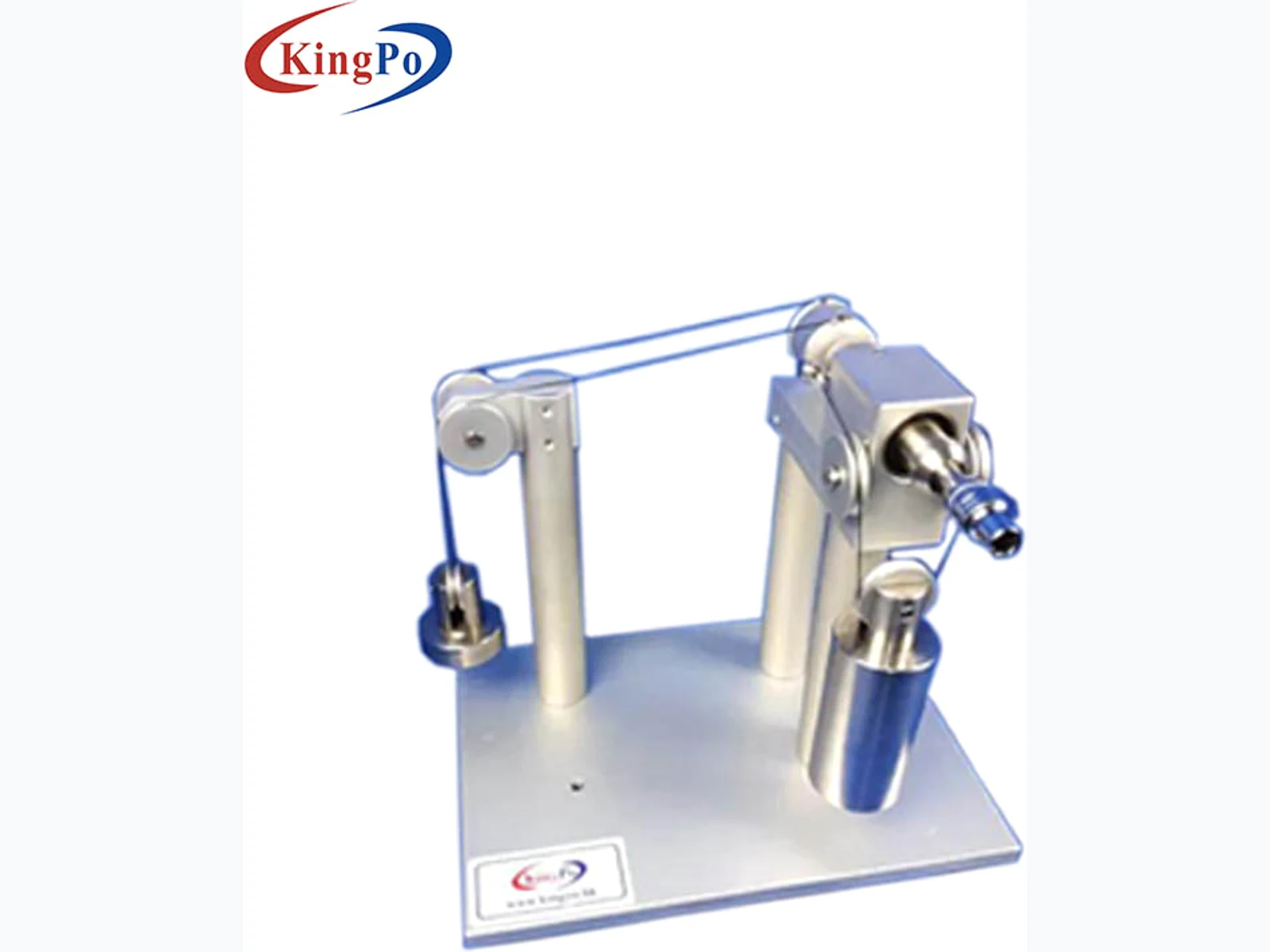
The mated pair is subjected to an axial separation force and shall not separate from the standard connector during the holding period. The force is 2 N to 3 N for connectors used in a home healthcare environment and 32 N to 35 N for sphygmomanometer connectors used in other environments. A higher force or a longer holding period may be used. The method is Annex J, with its own standard connector from Annex C.
The split follows who operates the connection. Annex A explains that connectors used in medical institutions are expected to hold pressure for a period and therefore need a mechanism that keeps the connection reliable, unlike a Luer slip connector to GB/T 1962.1 where only the assembly force is specified. For a home healthcare sphygmomanometer the patient is the user, and the requirement is excepted: no locking groove is needed. Table F.1 records the same pair of values as the minimum separation force in normal use, 2 N for home use or connection to the sphygmomanometer and 35 N otherwise.
The two clauses pull in different directions when a design is adjusted. Increasing the retention of the locking mechanism makes the connection harder to release by the patient in an emergency, and Annex E lists the ability to disconnect the cuff for deflation or on device failure as a user need. Reducing retention to make release easier risks a failure in 6.2. Neither clause sets a maximum release force, so the usable range is established through the usability work of Annex E rather than by a numerical limit in Clause 6.
Design inputs for the deferred neonatal connector
Table F.2 sets out 34 design criteria for a neonatal sphygmomanometer and cuff connector. It is informative, and it describes a connector family that Clause 1 places outside the present scope. Several values show why a separate amendment is needed rather than a simple extension of 6.1 and 6.2.
| Item | Adult or paediatric, Table F.1 | Neonatal, Table F.2 |
|---|---|---|
| Maximum operating pressure | 50 kPa (375 mmHg) | 25 kPa (187 mmHg) |
| Single-fault margin | at least 10 % above single-fault pressure | at least 10 % above 22 kPa (165 mmHg) |
| Rated pressure range | 0 to 55 kPa (412 mmHg) | 0 to 55 kPa (412 mmHg) |
| Leak test criterion | ≤ 0.5 kPa/min at 55 kPa (4 mmHg/min) | ≤ 0.25 kPa/min at 27 kPa (2 mmHg/min) |
| Minimum flow | 15 L/min at 50 kPa | 4.0 L/min at 25 kPa |
| Minimum separation force in normal use | 2 N home use, 35 N otherwise | 10 N |
| Rated temperature range | 0 °C to +50 °C | 0 °C to +45 °C, up to 100 % relative humidity |
| Structural material | rigid metal or plastic, or semi-rigid > 700 MPa | rigid metal or plastic; plastic preferred for MRI compatibility |
Both tables require at least 15 L/min or 4.0 L/min respectively so that the sphygmomanometer can depressurise the pneumatic system within 10 s. Both permit a single-hand or two-hand quick release and call for decontamination with one of a listed set of agents, including quaternary ammonium compounds, glutaraldehyde, ortho-phthalaldehyde, hydrogen peroxide, formaldehyde, isopropanol, 2.5 % sodium hypochlorite and 75 % ethanol. Items 29 to 34 of each table record how incompatibility with the Luer connectors and with the other parts of the series is achieved, by dimension in each case; item 32 is answered with the statement that this is the S1 connector.
IEC 80369-5:2016, clause-by-clause series. Part 4 of 7.